Yes/No Debate #1: Can Esperanto Solve the Worldwide Communication Problem?
Georg Jähnig publikigis antaŭ 3 jaroj en la Angla Ĉu en Esperanto?
Ni ne povas montri ĉi tiun filmeton al vi, ĉar viaj agordoj pri kuketoj ne permesas tion al ni.
Por rigardi kaj re-agordi viajn kuketojn, vizitu la paĝon Kuketoj.
Vi povas daŭre spekti la filmeton ĉe la originala platformo:
Originala paĝo
Spekti filmon ĉe Tubaro ne ŝtelas la spekton de Jutubo. La spekto enkalkuliĝas en ambaŭ Tubaro kaj Jutubo. Mi komprenas.
- 2 Spektoj
- Komentu!
- 0
Via ŝato/malŝato, ankaŭ viaj ĝenro-proponoj por ĉi tiu afiŝo estas konservita nur en Tubaro, ili ne estas sendataj ekster niaj serviloj. Simile, la statistikoj pri la afiŝo (spektoj, ŝatoj, komentoj ktp), ankaŭ aliaj atribuoj, ekzemple ĝenroj, venas de Tubaro mem. Ili neniel estas rilataj al tiuj ĉe la originala platformo. Mi komprenas.
Viaj signaloj pri problemoj rilate ĉi tiun afiŝon estos sendataj nur al la administrantoj de Tubaro. Ĉi tiu funkcio neniel estas rilata al ebla simila eco ĉe la originala platformo de la filmo. Por raporti problemon al la administrantoj de la originala platformo, uzu la raportofunkcion ĉe tiu platformo. Mi komprenas.
Priskribo
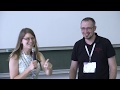
With Michael Boris Mandirola and Tim Keeley. ⬇️ All the questions asked are listed below ⬇️
More on the Yes/No method ➡️ http://www.yesnodebate.org
00:00 Intro
00:26 Intro by Michael
02:21 Intro by Tim
04:29 Decide who starts
05:12 Tim: Is Esperanto the easiest language for anyone to learn? ⚖️ Depends
06:47 Tim: Is Esperanto eurocentric in terms of vocabulary? ✅ Yes
07:14 Tim: Is Esperanto eurocentric in terms of grammar? ⚖️ Depends
09:03 Tim: Would it not be better if Esperanto did not require distinguishing between singular and plural for inanimate objects? ❎ No
11:33 Michael: Is it valuable that people can communicate internationally? ✅ Yes
11:53 Michael: Do you agree that having a common second international language as a standard for communication is useful and desirable? ❎ No
15:36 Tim: Considering the absence of plurals in many Asian languages, do you think Esperanto is eurocentric in that sense as well? ✅ Yes
18:00 Tim: Does Esperanto have tenses? ✅ Yes
18:20 Tim: Is it fair to expect speakers of many Asian languages to learn tenses? ✅ Yes
21:30 Tim: Do you think governments should enforce Esperanto learning on their people? ⚖️ Depends
24:32 Tim: Do you promote the use of Esperanto in films, music, and literature? ✅ Yes
25:44 Tim: Would you say that a film originally in Japanese should be made in Esperanto? ⚖️ Depends
27:21 Michael: Is it a privilege to use one’s native language in international communication? ✅ Yes
28:11 Michael: Does this privilege exist on a collective level when a country’s language is used in international communication? ❎ No
29:26 Tim: Do you think it’s possible to promote Esperanto to the extent that it resolves international communication issues? ⚖️ Depends
31:11 Tim: If people shift from learning English to learning Esperanto, is there a risk that all English materials in science and culture will become unintelligible? ❎ No
34:05 Michael: Is there a collective privilege in the economy when a country’s language is used in international communication? ✅ Yes
36:22 Michael: Do you agree that the number of people speaking English as a second language is substantial, comparable to native speakers? ⚖️ Depends
39:17 Michael: Do you agree that hegemonic languages have a significant influence on cultural production, resulting in unequal outcomes? ✅ Yes
42:16 Michael: Do you agree that using a language as an international language that is not tied to a specific country and culture would create fairer access? ❎ No
45:06 Tim: ”Do you acknowledge that English does not dominate in many parts of the world? ✅ Yes
47:21 Tim: Can we say that English plays a dominant role if the majority of people do not understand it? ✅ Yes
49:20 Tim: Isn’t asking everyone to learn Esperanto essentially the same as asking everyone to learn English? ❎ No
52:50 Michael: Do you agree that delivering a speech in a language you are fluent in gives you an advantage compared to doing so in a language you are not fluent in? ✅ Yes
56:32 Michael: Would you agree that in the international world, there is a situation of privilege for some and language barriers for others, and that this is a problem that should be addressed for the sake of equality? ❎ No
58:50 Tim’s wrap-up
1:03:44 Michael’s wrap-up
1:07:22 Closing: Information on the website and newsletter.