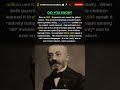
Jet Stream Was Published In Esperanto And Ignored #history #shorts
UnchartedHistoryVaults publikigis antaŭ 29 tagoj en la Angla Ĉu en Esperanto?
Ni ne povas montri ĉi tiun filmeton al vi, ĉar viaj agordoj pri kuketoj ne permesas tion al ni.
Por rigardi kaj re-agordi viajn kuketojn, vizitu la paĝon Kuketoj.
Vi povas daŭre spekti la filmeton ĉe la originala platformo:
Originala paĝo
Spekti filmon ĉe Tubaro ne ŝtelas la spekton de Jutubo. La spekto enkalkuliĝas en ambaŭ Tubaro kaj Jutubo. Mi komprenas.
- 1 Spekto
- 1 Komentoj
- 0
Via ŝato/malŝato, ankaŭ viaj ĝenro-proponoj por ĉi tiu afiŝo estas konservita nur en Tubaro, ili ne estas sendataj ekster niaj serviloj. Simile, la statistikoj pri la afiŝo (spektoj, ŝatoj, komentoj ktp), ankaŭ aliaj atribuoj, ekzemple ĝenroj, venas de Tubaro mem. Ili neniel estas rilataj al tiuj ĉe la originala platformo. Mi komprenas.
Viaj signaloj pri problemoj rilate ĉi tiun afiŝon estos sendataj nur al la administrantoj de Tubaro. Ĉi tiu funkcio neniel estas rilata al ebla simila eco ĉe la originala platformo de la filmo. Por raporti problemon al la administrantoj de la originala platformo, uzu la raportofunkcion ĉe tiu platformo. Mi komprenas.
Priskribo
The Japanese meteorologist Wasaburo Oishi ran an upper-air observatory at Tateno,
north-east of Tokyo, and between March 1923 and February 1925 he made 1,288
upper-air observations by tracking pilot balloons as they climbed. The results
showed something new: a persistent belt of extremely fast westerly wind roughly
ten kilometres above Japan, near Mount Fuji, present every winter rather than as
an occasional event. He published the finding in a 1926 report from the
Aerological Observatory of Tateno, written in Esperanto – the constructed
international language invented in the late nineteenth century to let people
communicate across borders. Almost no working meteorologist outside Japan read
Esperanto, and the work was effectively ignored abroad for two decades. The jet
stream was then rediscovered by aircrew during the Second World War, and
American B-29 crews flying high over Japan met winds strong enough that bombs
missed their targets and fuel calculations failed. Japan, meanwhile, had already
put the same winds to use: starting in late 1944 and over about eight months, it
launched close to 9,000 hydrogen-filled paper and silk balloons carrying
explosives towards North America, riding the west-to-east current Oishi had
described. Footage is from colour Pacific air war film.
Subscribe for the details everyone skipped.
jet stream, wasaburo oishi, esperanto, tateno observatory, b-29, balloon bombs, fu-go, meteorology history, mount fuji
Be one of our first 100,000! It’s a small step for you, but a huge help for us. Thank you so much for the support!
#history #science #ww2 #didyouknow #historyfacts #UnchartedHistoryVault
Disclaimer: This video is presented for educational and historical documentation purposes. The content is not intended to support, praise, or justify any actions. All information is presented so that viewers can understand historical events more objectively.