Whose Border Do the Stones in a Belgian Forest Still Guard?
Another History publikigis hieraŭ en Esperanto Ĉu ne?
Neniu ĝenro specifite.
Proponu ĝenrojn
Ni ne povas montri ĉi tiun filmeton al vi, ĉar viaj agordoj pri kuketoj ne permesas tion al ni.
Por rigardi kaj re-agordi viajn kuketojn, vizitu la paĝon Kuketoj.
Vi povas daŭre spekti la filmeton ĉe la originala platformo:
Originala paĝo
Spekti filmon ĉe Tubaro ne ŝtelas la spekton de Jutubo. La spekto enkalkuliĝas en ambaŭ Tubaro kaj Jutubo. Mi komprenas.
- 1 Spekto
- Komentu!
- 0
Via ŝato/malŝato, ankaŭ viaj ĝenro-proponoj por ĉi tiu afiŝo estas konservita nur en Tubaro, ili ne estas sendataj ekster niaj serviloj. Simile, la statistikoj pri la afiŝo (spektoj, ŝatoj, komentoj ktp), ankaŭ aliaj atribuoj, ekzemple ĝenroj, venas de Tubaro mem. Ili neniel estas rilataj al tiuj ĉe la originala platformo. Mi komprenas.
Viaj signaloj pri problemoj rilate ĉi tiun afiŝon estos sendataj nur al la administrantoj de Tubaro. Ĉi tiu funkcio neniel estas rilata al ebla simila eco ĉe la originala platformo de la filmo. Por raporti problemon al la administrantoj de la originala platformo, uzu la raportofunkcion ĉe tiu platformo. Mi komprenas.
Priskribo
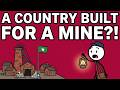
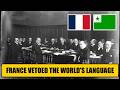
In August 1908, at a gathering in the settlement of Kelmis, Neutral Moresnet — a tiny neutral territory between Belgium and Germany — was declared the center of an international language, with hopes of creating the free Esperanto state of Amikejo there. What if the neighboring powers had recognized its sovereignty back then, and how would that alternate history have unfolded in the twentieth century?
In the first part of the episode, we look back at the true fate of this wedge of land beside the Vieille-Montagne zinc mine: how diplomats in 1816 left about three and a half square kilometers under joint administration, and how for decades people lived here without a court of their own or a separate currency, while the descendants of the first residents, the “Neutrals,” were not drafted into the army. We trace how, after the mine was exhausted, local postage stamps, a casino, and finally the “place of friendship” project of Dr. Wilhelm Molly and the Esperantist Gustave Roy appeared here. Then we examine the 1908 turning point itself and see what international treaties could have sustained the small country’s independence through the era of two world wars.
With the words “Now let’s imagine,” the fictional branch begins: how history might have unfolded if its neighbors had recognized Amikejo as a free state in 1908. Real events within it are marked by the words “in real history” and “in our world,” or framed as comparisons (“just as…”, “much as…”).
0:00 The band in Kelmis, 1908
0:35 Real History: a wedge of land around a zinc mine, 1815–1880s
3:01 Turning point: stamps, a casino, and the Esperanto state project
5:14 What If: the free state of Amikejo
7:13 The 20th century: a customs union with Belgium, World War II, and the four-country point
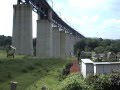
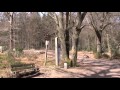
9:03 Present day: stones in the forest
Sources:
— Wim Meulenkamp, “Het vierde land. Neutraal-Moresnet, vondeling van Europa”, Maatstaf, 1986
— Cyril Robelin, “La trajectoire du docteur Molly à Moresnet-Neutre : du médecin à l’inventeur de nation”, paper, 2018 (ORBi, University of Liège)
— Aachen Border Treaty of 1816, Article 17; Treaty of Versailles of 1919, Article 32
— Articles on Neutral Moresnet in the English, German, Dutch, and French Wikipedias
Illustrations are AI-generated and are not historical photographs.
Maps: © OpenStreetMap contributors